Use, Care & FAQs.
Ordering & Delivery:
How much is shipping?
UK shipping is £2.95. Orders are usually dispatched within 1–2 working days and should arrive within 3–5 working days from dispatch.
European shipping is £12.95. European delivery times vary by destination, so please allow a little longer than UK delivery. Tracking will be provided where available.
We’ll always aim to get your clipr packed up and on its way as quickly as possible.
When will my clipr be dispatched?
Orders are usually dispatched within 1–2 working days.
We have limited stock available for the initial launch. If we sell out, more clipr will be available from mid-September.
Safety & Important Information:
Climbing is inherently dangerous. Carrying additional equipment on your harness may increase risk. clipr is not PPE or load-rated.
Inspect clipr before use. Never weight, fall onto, or use clipr as a structural or load-bearing device.
Extend gently and never force the telescopic sections beyond their natural stopping points. Take particular care when clipr is fully extended.
Keep the telescopic sections clean and free from chalk, dirt and grit. Wipe them down after use where needed to prevent build-up and keep them extending smoothly.
Always assess the situation yourself. clipr does not replace appropriate climbing equipment, good judgement or safe climbing practices.
Intended Uses & Limitations
cipr is designed for the following uses when used carefully and as described on this page:
Clipping a quickdraw to a bolt.
Clipping a quickdraw to a bolt with the rope already clipped into it.
Clipping the rope into an existing quickdraw.
Pulling rope down through the first quickdraw, leaving it pre-clipped while unclipping the rest of the route.
clipr is not PPE or a load-bearing device. Use with care, particularly when fully extended.
Using clipr:
What is clipr and what is it designed for?
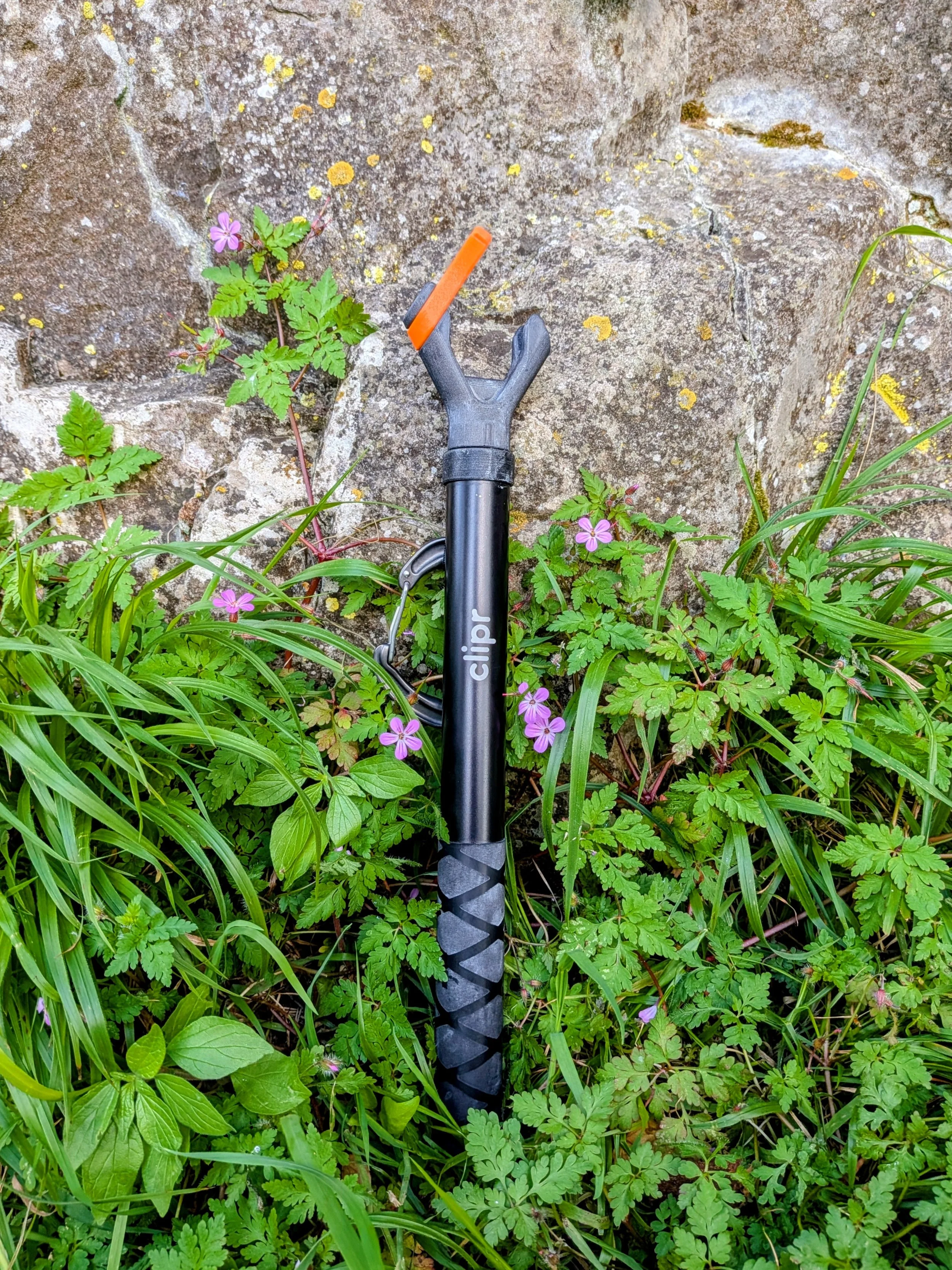
clipr is a compact clip stick designed for sport climbing. Its main purpose is to let you place the next quickdraw before committing to a difficult section, either with or without the rope already clipped.
The idea is simple: get the draw in, climb the moves, then clip the rope as normal when you reach it. You can also use clipr to clip the rope into an existing draw if needed.
It’s designed specifically for sport-climbing bolts. Other uses haven’t been tested and fall outside its intended use.
Will clipr work with my quickdraws and carabiners?
We designed clipr around DMM Alpha Sport and Petzl Spirit carabiners. If your snapgate is roughly this standard shape, it should work perfectly.
For smaller carabiners, such as the DMM Wisp or Black Diamond LiteWire, the clip can also be repositioned 4 mm backwards for a better fit.
Every clipr comes with four clips: two standard and two longer versions. The standard clips work perfectly with most quickdraws, while the longer versions are useful for larger, more curved (or, let’s face it, slightly odd) carabiners.
If neither works with your snapgate carabiners, we’d love to hear from you. Send us a few photos and we’ll make you a custom version. If it works well, we can then add it as an option for other people using the same draws.
Why two of each? We’ve never actually broken one, but they’re small, removable and easy to misplace, and losing one at the crag would suck. So you get a spare!
Can I carry clipr on my harness while climbing?
Yes. That's exactly what clipr was designed for. At 240g and 34cm collapsed, it's roughly the length of a medium quickdraw and light enough to rack directly onto your harness while you climb.
The head has no exposed hooks, helping prevent it snagging on your gear, clothing or surroundings.
Can I fall while climbing with clipr?
clipr was designed to be carried with you and, ideally, forgotten about while you climb. So yes - unlike larger clip sticks, clipr is designed to stay on your harness while you’re working a route, including when you fall.
In practice, falling with clipr on your harness doesn’t feel much different to falling with a few extra quickdraws. As with any equipment carried on your harness, though, it introduces another object into a fall, so take care and be aware of where it’s sitting.
Of course, falling is an inherent part of climbing and carries risk. Where possible, we’d rather you use clipr to make working a route safer and more enjoyable: get the draw and/or rope in above you, try the moves with the protection where you want it, and save the big efforts for the redpoint.
And just like you probably wouldn’t carry a full rack of spare draws on your redpoint attempt, we generally leave clipr on the ground when it’s time for the send!
Can you clip a draw in with a rope?
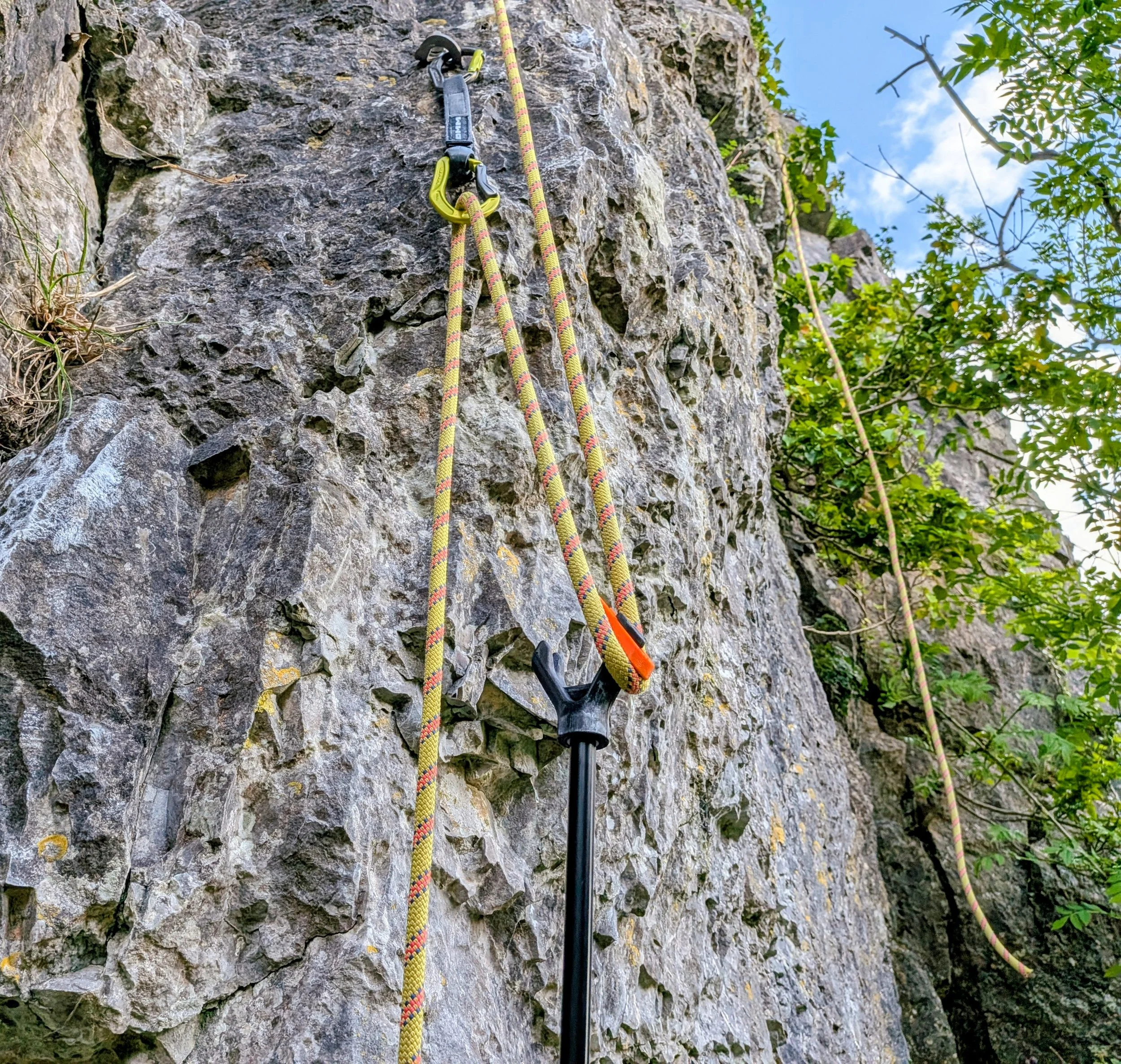
Yes! When clipping with a rope, support both strands so clipr isn’t carrying the full weight of the rope. As a guide, keep no more than around 4 metres of rope hanging in the system at any one time.
Too much unsupported rope adds weight to the pole and can cause the extendable sections to start contracting. Supporting both strands keeps the load light and makes clipping much easier.
This is the same for all clip sticks, big or small!
Can you clip the rope into a hanging draw?
Yes! In much the same way you would with a Beta Stick. Take in the slack, place a loop of rope into the clip, and support the slack/dead weight of the rope as you carefully raise clipr and clip it into the draw - this is somewhat of an art form!
Can you use clipr to pull down rope?
Yes! The orange clip can be moved backwards to create a hook, allowing you to pull a rope down while keeping it clipped into the first draw.
Too much rope hanging in the system adds unnecessary weight and resistance, which can overload clipr. We recommend pulling most of the rope through first, then using the hook to catch and pull down the end.
How durable is clipr?
clipr is lightweight by design, so it does need to be treated with care. Extend it gently and never force the sections beyond their natural stopping point.
Like any long telescopic pole, it’s most vulnerable when fully extended, so take extra care when using it at maximum reach. Used as intended, clipr is plenty strong enough for the job it’s designed to do.
Don’t be a ham-fisted gorilla and you’ll be fine! 🦍
Should clipr be my only clip stick?
Maybe! clipr was designed to be small, light and easy to climb with, while still being long enough for around 90% of bolt-to-bolt clipping.
If you’re looking for a stick that can clip half a route from the ground, clipr probably isn’t for you. Bigger clip sticks are longer, more durable and can sometimes get you past multiple bolts before setting off. They absolutely have their place, we just don’t think that place is strapped to you halfway up a route!
We made clipr because we wanted something we could actually climb with. We love it, but we’ll happily admit that we sometimes take a longer stick as well.
That said, if we’re only taking one clip stick to the crag, it’s always clipr.